Is Greggs Food Baked Fresh Every Day?

Is Greggs Food Baked Fresh Every Day? The Truth About Their Bakery Process
The first time someone told me Greggs doesn’t bake everything from scratch in every single shop, I felt a bit betrayed. My local branch has that warm bread smell most mornings, so surely that’s proof it’s all mixed and kneaded right there behind the counter? Turns out the real answer is more interesting than that, and honestly, more impressive too.
I’ve gone through Greggs’ own annual report, its sustainability disclosures, supply chain trade press and more than a few customer forums so you don’t have to. Here’s exactly how your order gets from flour to shelf, what happens to the stuff that doesn’t sell, and — because let’s be honest, it’s probably why you clicked — the exact time Greggs stops serving breakfast.
Jump to
The quick answer
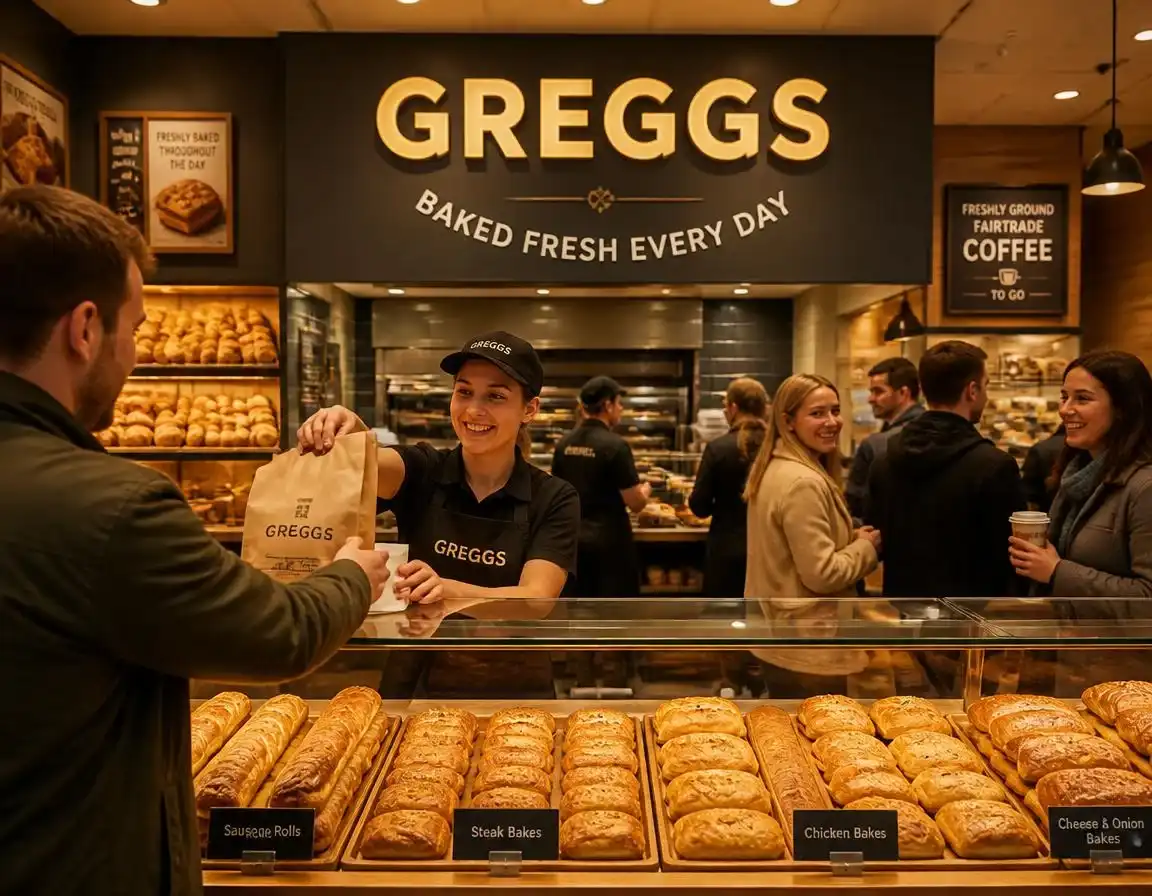
Yes — Greggs food is baked fresh every day, in the shop itself, using the shop’s own ovens. But “baked fresh in shop” doesn’t mean “made from raw flour in shop.” The dough, pastry and fillings are prepared first at one of Greggs’ own regional bakeries, then delivered to shops chilled, part-baked or frozen, where shop teams prove and bake everything properly, in small batches, right up until closing time.
Anything that hasn’t sold by the end of the day is taken off the shelves and never put back out the next morning. That’s the “daily fresh” promise in a nutshell. Stick around for the full story, including why your bake sometimes arrives lukewarm rather than piping hot, and what really happens to the food that doesn’t sell.
How Greggs actually makes your food
Greggs isn’t just a shopfront brand that buys in food from someone else and reheats it. It owns its entire supply chain — the bakeries, the lorries and the shops — which is fairly unusual for a business this size on the British high street. Most food-to-go chains lean on third-party manufacturers; Greggs makes almost everything itself, end to end.
As of the end of 2025, that meant supplying more than 2,739 shops and over 33,000 staff from its own network of regional bakeries, manufacturing sites and distribution centres. The business is growing fast too — turnover hit around £2.2 billion in 2025, and Greggs opened roughly four new shops a week that year, with another 120 or so planned for 2026.
To keep up with that growth, Greggs is in the middle of a major supply chain upgrade. A new frozen-food distribution and manufacturing site in Derby is being switched on through 2026, with robotic picking rolling out from the middle of the year, while a second National Distribution Centre for chilled and ambient goods is being built in Kettering, due to open in 2027. Together, they’re designed to support a future estate of around 3,500 shops.
Here’s how that all translates into the sausage roll in your hand:
The key point is the middle of that chain. Greggs shops are finishing kitchens as much as they are bakeries — they take dough, pastry and fillings that have already been prepared centrally, then prove, bake and assemble them properly on site, several times a day, rather than making everything from a bag of flour on the premises.
Check out Greggs Christmas Menu 2026
The delivery schedule: how fresh stock reaches every shop
This is the bit most people never think about, but it’s exactly why a Greggs shelf doesn’t look sad and half-empty by 3pm. Greggs runs its own delivery fleet with roughly 600 drivers working across two shifts, which means most shops get topped up twice a day — once overnight and once during the day — rather than relying on a single early-morning drop that has to last until closing.
That two-drop pattern matters for freshness in a very practical way: it means a busy city-centre shop that sells out of sandwiches by lunchtime can get a second delivery in the afternoon, instead of just running on empty shelves or, worse, holding stock back for longer than it should.
The fleet itself has had a proper refresh recently, too. In 2025, Greggs invested in more efficient double-deck trailers and introduced 25 new urban artics designed for tighter city routes, while renewable HVO biofuel is now used at three of its sites, covering over a quarter of its total fuel use. Real-time vehicle tracking (telematics) also helps route deliveries more efficiently and keep an eye on driver safety.
Check out Greggs Festive Bake 2026
In-store provers and ovens: what really happens behind the counter
“Proving” is just the bakery term for letting dough rest and rise before it goes in the oven — skip it, and you’d end up with something closer to a hard biscuit than a fluffy roll. Greggs shops use proving equipment and their own ovens to finish off dough and pastry that’s arrived from the bakery, rather than simply defrosting a ready-made product and putting it on a shelf.
Greggs has confirmed this directly: its daily-fresh sandwiches use bread that’s baked in shop on the day, and its savouries — sausage rolls, bakes, pasties and the rest — are baked fresh in shop ovens throughout the day, not just in one big batch first thing. Once baked, items are put out to cool naturally rather than kept warm.
Why does my Greggs bake sometimes feel a bit cold?
This one trips a lot of people up, and there’s a proper explanation for it. Greggs deliberately doesn’t keep its savoury bakes in a heated cabinet or use heat-retaining packaging. Partly that’s a quality choice — Greggs itself says baking fresh and letting items cool naturally gives the best result. But there’s also a tax reason: back in 2012, HMRC’s so-called “pasty tax” proposal would have added 20% VAT to any freshly baked food sold above room temperature. Greggs pushed back hard against it at the time, and the compromise that followed is still baked into (sorry) how the chain operates — pastry items are baked, then left to cool, rather than held hot, which is also why they’re priced the way they are.
The practical upshot for customers: if you want your bake as close to oven-fresh as possible, timing is everything. Former staff and food writers have pointed out that the surest way to get one straight out of the oven is to be in shop when a new batch comes off the tray, since Greggs bakes in rounds through the day rather than on a published schedule.
Check out the Heated Display Cabinets used at Greggs
What happens to unsold Greggs food? The “daily fresh” rule explained
This is where Greggs’ approach genuinely stands out, and it’s worth understanding properly rather than taking on faith. The policy is simple to state: whatever hasn’t sold by the end of the day comes off the shelves and is never put back out for sale the next morning. No exceptions, no “reduced to clear” pile sitting out overnight.
Before any of that happens, though, prevention comes first. Greggs uses a forecasting system paired with day-to-day judgement from shop teams to predict demand and avoid over-ordering in the first place — the aim is to bake close to what will actually sell, not to bake extra and rely on donations to mop up the excess.
For whatever is still left over, Greggs works through a clear hierarchy of channels, roughly in this order of preference:
| Channel | What it means | Worth knowing |
|---|---|---|
| Greggs Outlet shops | A smaller number of dedicated discount shops sell surplus and short-dated stock at reduced prices | Profit is shared back into the local community via the Greggs Foundation |
| Charity partners | Local charities and community groups collect unsold food directly from shops | Some of these relationships go back decades |
| Too Good To Go | Customers buy a surprise “Magic Bag” of unsold food through the app for a fraction of the price | Running since 2021; available in 2,000+ shops; over 5 million bags saved |
| Colleague Magic Bags | Shop staff can take home unsold food at the end of a shift | Cuts down what needs collecting or binning at all |
| Anaerobic digestion (the remainder) | Whatever’s left goes back to manufacturing sites rather than landfill | Turned into biogas and compost |
The share of food actually being redistributed to people rather than sent off for energy recovery has climbed steadily for years:
Under its sustainability programme, the Greggs Pledge, the company set out to cut food waste by 25% (versus 2018 levels) and to keep pushing toward the goal of 100% of surplus food reaching people who need it, rather than energy recovery. It isn’t there yet, but the trend is moving in the right direction year over year.
Greggs’ approach broadly mirrors the official UK food and drink waste hierarchy published by the government, which ranks prevention and redistribution to people well above sending edible surplus for energy recovery like anaerobic digestion.
Check out Greggs opening times
Greggs breakfast times: when does breakfast actually end?
Right, the bit you’ve probably scrolled down for. Whether you’re typing “what time do Greggs stop serving breakfast” into Google at 10:58am in a slight panic, or just planning your morning properly, here’s the definitive answer: Greggs stops serving breakfast at 11am, in almost every UK shop, every single day of the week — weekdays and weekends alike. Greggs confirms this cut-off itself, so there’s no myth-busting needed here; it really is 11am, full stop.
When do Greggs stop serving breakfast start, though? That bit’s less fixed, since it depends on what time the shop opens. Most standard high-street branches start their breakfast menu somewhere between 6am and 6:30am on weekdays, and a little later, around 7am, on Sundays. Travel hubs are a different story entirely — some airport and motorway service branches open as early as 5am, and a handful run 24 hours.
| Shop type | Doors open | Breakfast ends | Notes |
|---|---|---|---|
| Standard shop (Mon–Sat) | ~6:00–6:30am | 11:00am | Exact opening time varies by shop |
| Standard shop (Sunday) | ~7:00–7:30am | 11:00am | Later start, same breakfast cut-off |
| Drive-thru | ~6:00am | 11:00am | Same breakfast hours as standard shops |
| Travel hubs (airports, stations, services) | From as early as 5:00am | Usually 11:00am | A handful trade 24 hours |
So to answer every version of the question in one go — what time does Greggs stop serving breakfast, when do Greggs stop serving breakfast, and what time do Greggs stop serving breakfast on a Sunday — it’s 11am, every day. After that, the counter switches over to the lunch range: sandwiches, baguettes, hot bakes, pizza slices and the meal deals.
The bottom line
So, is Greggs food baked fresh every day? Genuinely, yes — just not in the “flour and yeast measured out on the premises” way some people imagine. It’s an industrial-scale bakery operation with real logistics behind it: regional bakeries preparing the ingredients, a delivery fleet running twice-daily drops, and shop teams proving and baking fresh batches in-store from first thing until closing. Add in a “daily fresh” policy that actually removes unsold stock every night, plus one of the more thorough food redistribution systems on the high street, and the “fresh” label holds up better than a lot of fast food marketing usually does.
If you want the best possible bake, the trick isn’t complicated: turn up when a fresh batch has just come out (mid-morning and around lunchtime tend to be good bets), and if you’re after a bargain rather than perfection, check whether your local shop runs a Too Good To Go Magic Bag before closing. And if breakfast is the whole reason you’re reading this — you now know to get there before 11am.
Frequently asked questions
Is Greggs food actually baked fresh every day?
Yes. Shop teams bake bread, sausage rolls, bakes and other savouries in the shop’s own ovens throughout the day, and anything left unsold is taken off the shelves at closing rather than sold the next day. The dough and fillings are prepared centrally at Greggs’ own regional bakeries first, then delivered to shops to be proved and baked fresh on site.
What time does Greggs stop serving breakfast?
Greggs stops serving its breakfast menu at 11am in almost all UK shops, every day of the week, including weekends. After 11am the menu switches over to lunch items such as sandwiches, bakes, hot food, pizza slices and meal deals. A small number of travel hub branches may run slightly different hours.
What happens to Greggs’ unsold food at the end of the day?
Unsold food is never put back on sale the next day. Greggs redistributes it through its discounted Outlet shops, local charity partners, the Too Good To Go app and colleague Magic Bags, which together accounted for 45% of all unsold food in 2024. The remainder goes back to its manufacturing sites for anaerobic digestion, where it’s turned into biogas and compost rather than landfill.
This article is independent editorial content based on publicly available information from Greggs plc’s corporate reporting, sustainability disclosures and UK trade press, current as of 2026. Individual shop hours, menus and processes can vary by location — check with your local shop for specifics.

One Comment