Greggs Sausage Roll Inflation Tracker

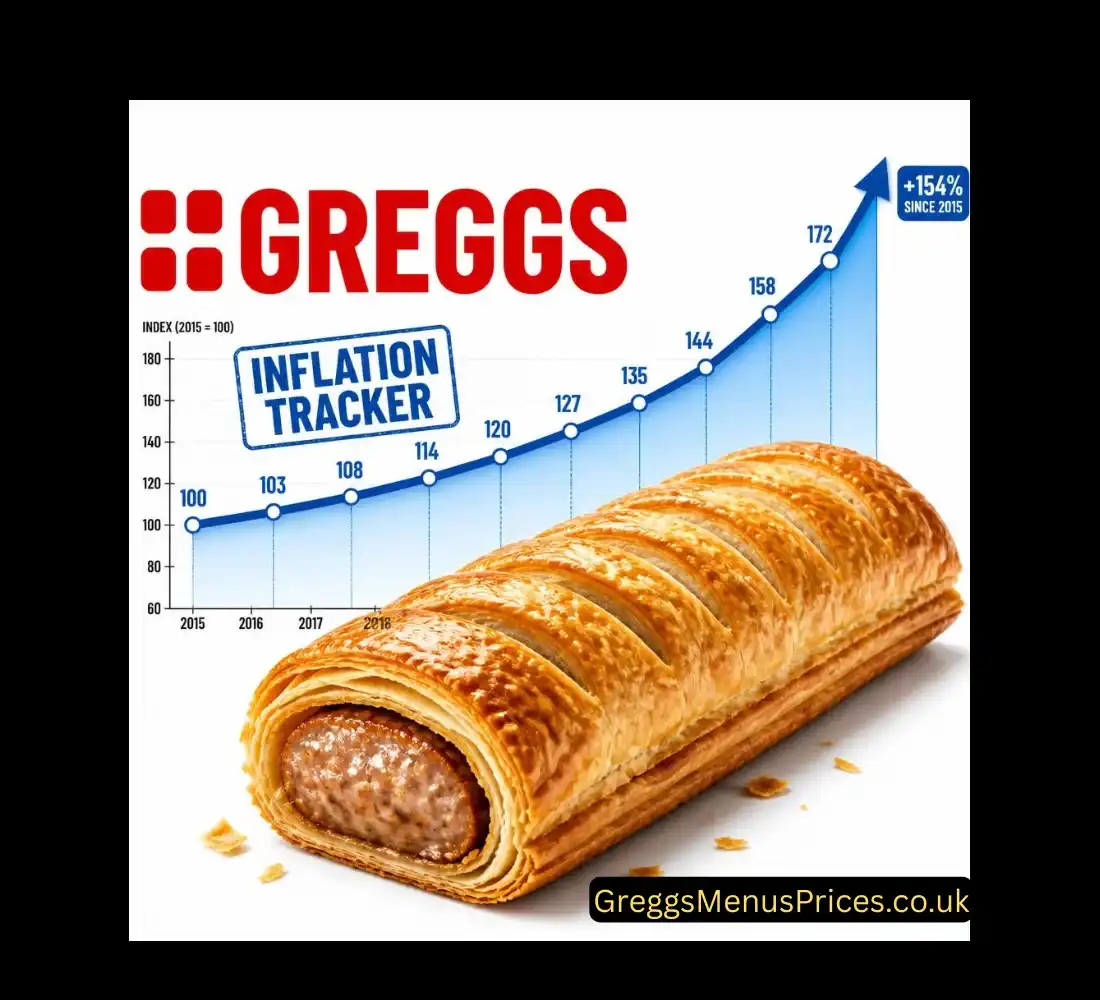
In 2016, a Greggs sausage roll cost 85p. In 2026, the same pastry from the same bakery chain costs £1.30 on a standard high street. That’s a 59% price increase in a decade — nearly double the rate of UK wage growth over the same period, which came in at around 30%. For a lot of people, that number sits somewhere between mildly alarming and entirely unsurprising.
The Greggs Sausage Roll Inflation Tracker maps this price history against official UK CPI data from the Office for National Statistics, giving a clear visual picture of how Britain’s favourite pastry has outpaced the broader cost of living over ten years. The interactive chart runs year by year from 2016 to 2026, plotting the actual sausage roll price alongside a scaled CPI inflation line so you can see exactly when the two started to diverge.
The salary calculator takes it further. Enter your annual income, choose your store type — standard high street, city centre, or airport — and the tool works out how many sausage rolls your salary could theoretically buy in 2016 versus today. The purchasing power gap is usually sobering. For habitual buyers going five times a week, the tool confirms your annual sausage roll bill is now around £130 higher than it was for the same routine in 2016.
There’s also a dedicated section on the airport premium: at £1.85 versus £1.30 on the high street, franchise outlets at airports and service stations charge 37% more for the same product. Worth knowing before you reach for your wallet at departures.
Sausage Roll Inflation Tracker 📈
The unofficial barometer of the UK’s cost of living squeeze
How the Greggs Sausage Roll Price Has Changed Since 2016
How Many Sausage Rolls Can Your Salary Buy?
Your salary bought 41,176 rolls
Your salary buys 25,926 rolls
(A 37% drop in real terms)
• 2016 annual bill: £221
• 2026 annual bill: £351
That’s £130 more per year for the exact same habit.
✈️ Airport vs. High Street: The Price Gap
Franchised stores at transport hubs operate on massive markups.
The airport premium costs you £2.00 in extra charges per year on pastries alone.
Q1: What time period does the tracker cover and what does the chart show?
The tracker runs from 2016 to 2026 — a ten-year window that captures the most significant period of sustained price change in Greggs’ recent pricing history. Over that period the standard sausage roll has risen from 85p to £1.30 at a standard high-street store, representing a cumulative increase of approximately 59% in cash terms. The chart plots both the sausage roll price at each year-point and the UK Consumer Price Index (CPI) inflation measure, scaled to the same 2016 baseline, making it immediately visible that sausage roll inflation has substantially outpaced the general rate of consumer price growth across the same period.
Q2: How does the purchasing power calculator work?
You enter your annual salary and select your usual Greggs store type. The calculator divides your salary by the 2016 sausage roll price of 85p and then by the 2026 price at your chosen store type, producing two numbers: how many sausage rolls your salary could theoretically have bought in 2016, and how many it can buy today. The gap between those two figures is your “sausage roll purchasing power loss.” For a person on the UK median salary, the loss typically runs to several thousand sausage rolls — a deliberately playful but genuinely revealing way of illustrating how real wages have failed to keep pace with specific food inflation.
Q3: Why has the sausage roll price risen faster than general UK inflation?
Several factors have driven Greggs’ pricing above the general CPI rate over the past decade. Pork and wheat flour — two core ingredients in the sausage roll — have experienced particularly sharp cost increases driven by post-Brexit supply chain adjustments, global wheat price volatility following the disruption of Ukrainian agricultural exports from 2022 onwards, and rising energy costs affecting both agricultural production and commercial baking operations. Significant increases to the UK National Living Wage have also raised Greggs’ staff cost base materially. Greggs plc has cited all of these pressures explicitly in its annual reports and trading updates.
Q4: What is the price gap between a standard Greggs and an airport franchise location?
As of 2026 a sausage roll costs £1.30 at a standard high-street Greggs, £1.40 at a City or London branch, and £1.85 at an airport or motorway services franchise location — a premium of roughly 42% over the standard price at the highest-cost venue. This disparity exists because franchise operators at transport hubs pay substantially higher rents, face elevated staffing and logistics costs, and operate under different commercial terms with Greggs plc than directly managed high-street stores do. The tracker includes an airport premium calculator that shows the additional annual cost in pure sausage roll terms based on how many airport trips you make each year.
Q5: Where does the historical price data come from?
Historical sausage roll pricing data has been compiled from UK national media reporting on Greggs price changes, Greggs plc trading statements and annual report disclosures, consumer price tracking sources, and the pricing records maintained on this site. UK CPI inflation data is sourced from the Office for National Statistics (ONS). This is an independent fan resource and the historical data represents the best available evidence from publicly accessible sources rather than an official Greggs record. If you are aware of an inaccuracy in the historical pricing timeline, please get in touch via the Contact Us page so the data can be reviewed.

Hey there! I’m Harper Jones, and I spend my time scouting to find you the absolute best places to eat from and help you hunt down the top food deals so you can enjoy amazing meals without the hefty price tag. Also, I attempt to provide you with supplementary information regarding the food industry.