
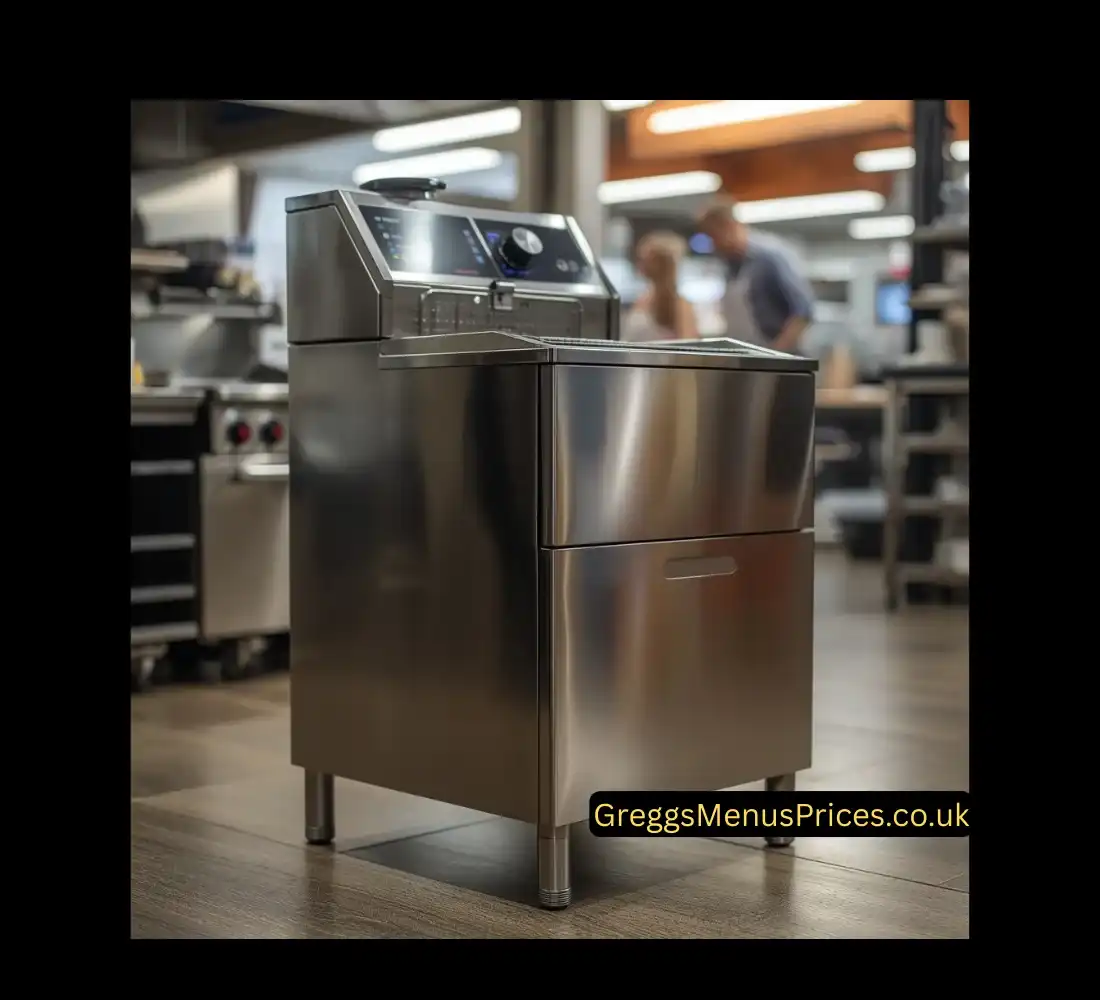
Commercial Deep Fryers at Greggs in the UK — The Complete 2026 Buyer’s Guide

Whether you’re kitting out a new restaurant kitchen, replacing a tired old fryer, or just curious what a chain like Greggs is cooking their hash browns in — this is the only guide you’ll need. We’ve done the research so you don’t have to.
Walk into virtually any commercial kitchen in the UK — from a seaside chippy to a central London Greggs — and you’ll find a commercial deep fryer humming away, doing one of the most important jobs in food service. We’re talking about consistently golden chips, perfectly crisped chicken goujons, and those irresistible hash browns that make Monday mornings bearable.
But buying the right commercial deep fat fryer isn’t as simple as picking the cheapest one on the shelf. The wrong unit costs you money in wasted energy, excess oil consumption, and inconsistent food quality. The right one becomes the backbone of your kitchen for a decade or more.
In this guide, we cover everything from the basic types of commercial fryers and what makes gas different from electric, through to the specific brands dominating the UK market in 2026, pricing expectations, and what Greggs — the UK’s biggest bakery chain — is likely using behind their counter. We’ll also tackle UK-specific safety regulations and maintenance tips so your fryer stays in top shape.
Whether you’re a chef, a catering manager, a franchise owner or just someone who’s genuinely curious how those Greggs potato wedges get their crunch — you’re in the right place. Let’s get into it.
What Is a Commercial Deep Fryer?
A commercial deep fryer is a heavy-duty, high-capacity cooking appliance designed for continuous use in professional kitchens. Unlike the domestic fryer sitting in your kitchen cupboard, a commercial unit is built to handle the brutal realities of a busy food service environment — frying hundreds of portions every day, recovering quickly between batches, and maintaining oil temperature with far greater precision.
At their core, all commercial deep fat fryers work on the same principle: they heat a vat of cooking oil to a set temperature (typically between 160°C and 195°C), and food is submerged in the hot oil via a wire basket. The rapid heat transfer cooks the food quickly while forming the characteristic golden, crispy exterior we all love.
What separates commercial fryers from domestic ones is everything else — the build quality, the BTU output or kilowatt rating, the oil capacity (measured in litres in the UK), the speed of temperature recovery after adding cold food, the filtration systems that extend oil life, and the safety features required by UK law.
📐 Anatomy of a Commercial Deep Fryer
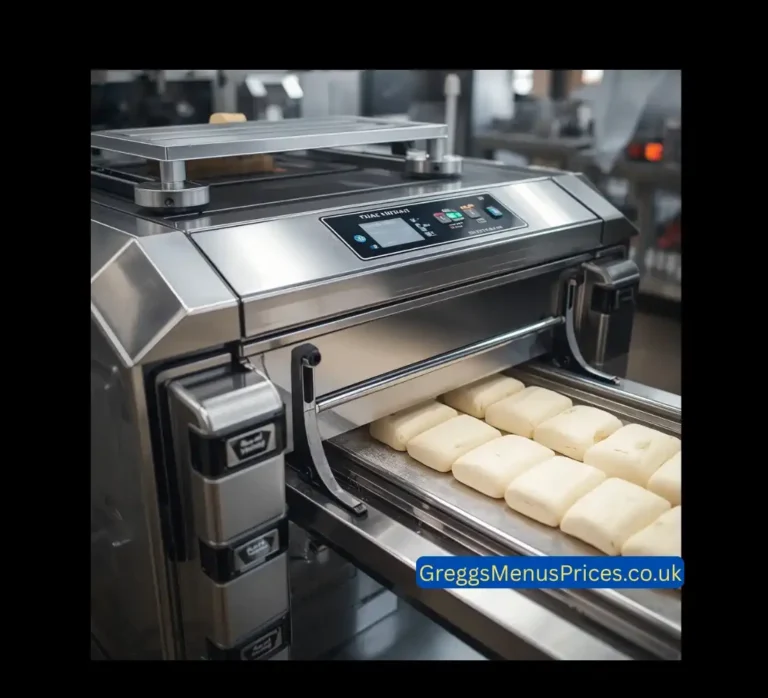
Check out the Commercial Retarder used at Greggs
Not all commercial fryers are the same. The type you need depends on what you’re cooking, how much volume you’re doing, and the size of your kitchen. Here are the four main types you’ll find in UK commercial kitchens in 2026. The most common type in UK restaurants. Simple design, easy to clean, versatile for chips, fish, chicken, and most fried foods. Oil is directly heated by elements or burners below. Gas tubes run through the bottom of the oil vat. Excellent for battered or breaded products as sediment falls to the cooler zone below the tubes. Great temperature recovery. Sealed lid creates pressure that raises the boiling point of oil, cooking food at lower temperatures in less time. Produces incredibly moist, juicy chicken. Used by KFC and major chains. Compact unit designed to sit on a work surface. Holds 6–12L of oil. Ideal for lower-volume operations, cafés, snack bars, and shops where space is at a premium — like Greggs. There’s also the flat-bottom fryer, which is designed for delicate products like doughnuts, fritters, and other floating items that would be crushed or deformed in a basket. Some specialist bakeries use these for their sweet fried products. Finally, ventless (hoodless) fryers are becoming increasingly popular in the UK as they use built-in filtration to remove fumes and don’t require a full catering extraction canopy — very useful for smaller stores with limited ventilation infrastructure.Types of Commercial Deep Fryers
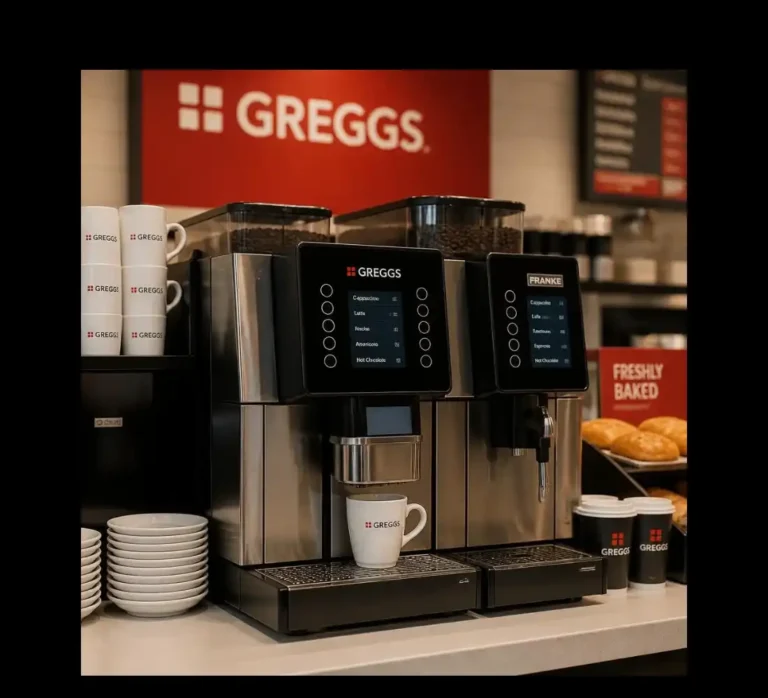
Check out the Coffee Machines used at Greggs
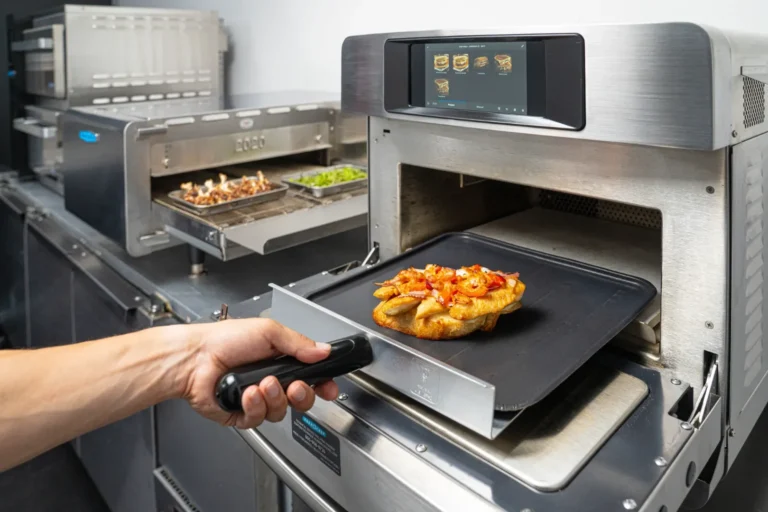
This is the question we get asked more than any other in commercial kitchen planning. The honest answer is: it depends on your setup, your volume, and your energy costs. Let’s break it down clearly. Check out the Bake-Off Ovens used in Greggs’ Kitchen Gas vs Electric — Performance Comparison (Typical UK Commercial Fryer) Scored 1–10 across five key performance metrics for a typical mid-range fryer in a UK commercial kitchen 🔥 Gas Fryer ⚡ Electric FryerGas vs Electric: Which Is Right for Your Kitchen?
Gas Commercial Fryers
Electric Commercial Fryers
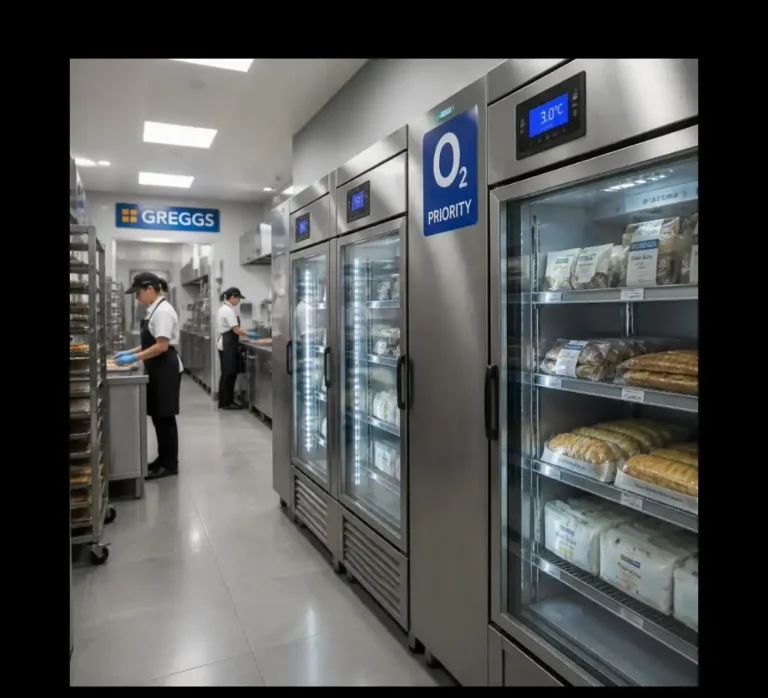
Check out the Commercial Refrigerators used at Greggs
The UK commercial fryer market has a rich mix of home-grown manufacturers and international heavyweights. Here are the brands you’ll actually encounter when shopping for a commercial deep fat fryer in Britain.Top Commercial Deep Fryer Brands in the UK (2026)
Check out the Heated Display Cabinets used at Greggs
Commercial fryer prices in the UK vary enormously depending on capacity, fuel type, build quality, and brand. Here’s a comprehensive breakdown of what you can expect to pay in the UK market as of 2026. All prices exclude VAT.UK Commercial Deep Fryer Price Guide 2026
Category Type Oil Capacity UK Price Range Example Models Best For ⚡ Electric Countertop Fryers Entry Level Single pot, electric 6–8 litres £350–£550 Buffalo EV246, Parry PEF8 Cafés, snack bars, low-volume Mid-Range Single/twin pot, electric 8–14 litres £550–£1,100 Lincat ECO8, Valentine V20 Pubs, casual dining, bakeries Premium Countertop Twin pot, electric 14–20 litres £1,100–£2,200 Valentine V40, Lincat ECO8T Busy cafés, hotel kitchens 🔥 Gas Floor-Standing Fryers Entry Level Gas Single pot, floor-standing 9–12 litres £700–£1,300 Parry 1SLFG, Lincat J15 Fish & chip shops, takeaways Mid-Range Gas Single/twin pot, floor-standing 12–18 litres £1,300–£2,800 Lincat J20, Falcon G900 Restaurant kitchens, pubs Heavy-Duty Gas Twin/triple pot, floor-standing 18–30 litres £2,800–£4,800 Falcon F900, Pitco SG14 Hotel kitchens, high-volume QSR High-Performance Gas Battery fryer / multi-vat 30+ litres £4,800–£9,000+ Pitco SG18, Henny Penny OFG322 Large-scale QSR, central kitchens 🔒 Specialist Fryers Pressure Fryer Gas or electric, sealed lid 14–40 litres £3,500–£8,500 Henny Penny PFG600, PFE500 Fried chicken specialists, KFC-style Ventless / Hoodless Electric, self-filtering 6–14 litres £1,800–£4,500 Henny Penny F5 OFE, Pitco Solstice Sites without extraction canopy Flat-Bottom Fryer Gas or electric 8–16 litres £650–£2,200 Lincat DF, specialist units Doughnuts, churros, fritters
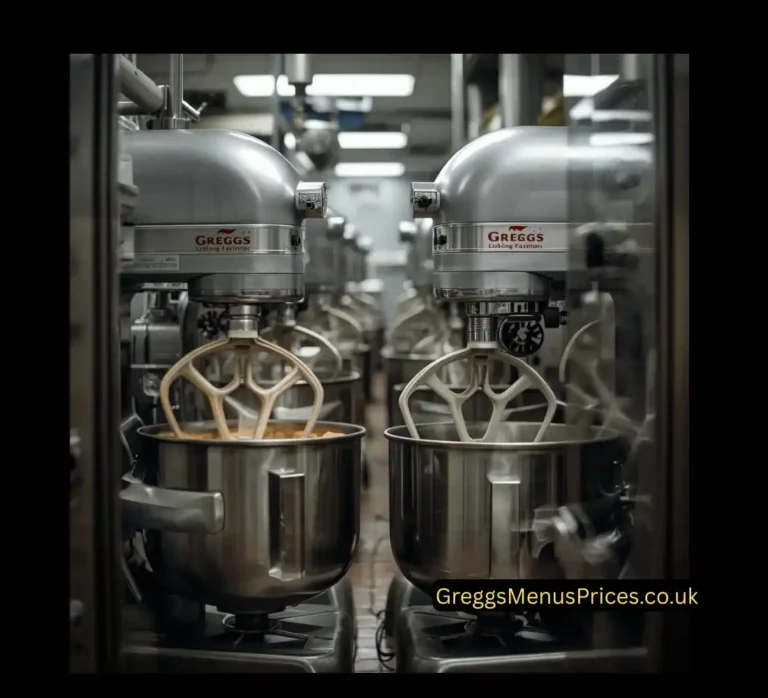
Also, check out the Mixers & Dough Plants used at Greggs
Let’s talk about what’s actually going on behind the counter at Greggs. This is one of those questions that’s surprisingly hard to get a definitive answer to, because Greggs plc — like most large foodservice chains — doesn’t publicly disclose the specific equipment brands used across their 2,739+ stores. But based on what we know about their menu, their operational setup, and the UK commercial kitchen equipment market, we can paint a very clear picture. First, let’s be clear about what Greggs actually deep fries in-store. It’s not the sausage rolls or the bakes — those come from their nine regional manufacturing bakeries pre-made and are reheated in convection ovens. The items that require in-store deep frying are:
Hash Browns — those deliciously crispy discs available from opening until mid-morning, served as part of the breakfast menu. Southern Fried Potato Wedges — available from late morning, cooked fresh throughout the day. Southern Fried Chicken Goujons — the chicken breast strips coated in spiced breadcrumbs, a lunchtime staple. Spicy BBQ Chicken Bites — smaller, coated chicken pieces. Mozzarella & Cheddar Bites — breaded cheese bites that require careful temperature control to get that perfect gooey centre without leaking. All of these are finished by frying in-store — which means every Greggs shop needs at least one commercial deep fat fryer operating throughout the trading day.
Here’s the thing about Greggs stores: they are famously compact. That efficiency is a core part of how Greggs keeps prices so low. There’s very limited space behind the counter, and every piece of equipment needs to earn its footprint. A three-pot floor-standing gas fryer simply isn’t going to fit into most Greggs shops. What Greggs needs is a compact, reliable, electric countertop commercial fryer — or a small single-pot floor-standing unit — that can handle consistent batches of the items above throughout the day.
The fryer requirements for a Greggs store are quite specific: it needs to be quick to heat and recover (customers don’t wait long), precise in temperature control (hash browns and cheese bites have specific frying temperatures), easy to clean and maintain (food safety in a busy bakery environment is paramount), and compact enough to fit in an already busy counter area.
Based on the above requirements, and cross-referencing the UK commercial kitchen equipment market, several brands fit the profile extremely well. Lincat’s ECO8 and countertop electric fryer range is the most obvious candidate — UK-made, incredibly well-supported nationwide, designed specifically for the kind of lighter commercial frying Greggs does, and used extensively by similar UK bakery and café operations. Their compact footprint and electric operation (no gas connection required) makes them ideal for a Greggs store fit-out.
Henny Penny’s smaller open fryer models are another strong candidate — their reputation in the QSR sector and specifically for chicken products (like the Goujons and Chicken Bites) makes them a natural fit. Pitco and Buffalo countertop electric units are also widely deployed in UK bakery-café hybrids and would be consistent with Greggs’ operational needs.
For their larger central production bakeries — where Greggs produces at scale — an entirely different tier of industrial deep frying equipment would be in use, including continuous conveyor fryers for hash browns at industrial volume.What Deep Fryers Does Greggs Use?
🟢 Greggs’ Fried Menu Items — What Actually Goes in the Fryer
The Store Setup Challenge
Greggs Deep Fat Fryer Supplier UK
Greggs Item Frying Method Ideal Oil Temp Approx. Time Fryer Type Suited Hash Browns (2-pack) Open deep fry 175–180°C 3–4 mins Open pot, electric countertop Southern Fried Potato Wedges Open deep fry 170–180°C 4–5 mins Open pot, electric or gas Southern Fried Chicken Goujons Open deep fry (breaded) 180–185°C 4–6 mins Open pot or tube fryer Spicy BBQ Chicken Bites Open deep fry (coated) 180–185°C 3–5 mins Open pot, electric countertop Mozzarella & Cheddar Bites Open deep fry (breaded) 170–175°C 2–3 mins (precise) Electric with precise thermostat
Check out Greggs Items under 300 calories
Beyond brand and fuel type, these are the specific features that separate a good commercial deep fryer from one that’ll drive you mad after six months of daily use.
In the UK, commercial fryer capacities are measured in litres. A single-pot countertop unit might hold 6–10 litres; a floor-standing single-pot commercial fryer typically holds 10–16 litres; twin-pot units double that. For reference, a 10-litre fryer can handle roughly 500g–1kg of food per batch, depending on the item. Don’t size up unnecessarily — more oil means more cost, more heating energy, and more waste when you change the oil.
Every commercial fryer should be able to hold temperatures between 160°C and 195°C. What separates the great from the average is recovery speed — how quickly the oil returns to the set temperature after you add a cold batch of food. If recovery is slow, your next batch comes out greasy instead of crisp. Look for units with high BTU ratings (for gas) or high kW ratings (for electric) relative to their oil capacity.
This single feature can save you hundreds of pounds per year. Built-in filtration systems (found on premium models from Pitco, Henny Penny, and others) automatically filter hot oil through a fine mesh, removing food particles before they burn and turn the oil dark. Filtered oil lasts significantly longer — some operators report 40–50% oil savings with a quality filtration system.
Found in well-designed open pot and tube fryers, a cold zone is a pocket of oil that sits well below the main frying zone. Food sediment sinks into this cooler area rather than circling back up into the hot frying zone where it would burn. Valentine fryers are particularly celebrated for their cold zone design, which keeps the oil cleaner for longer.
Consider whether you need a single large basket, twin half-baskets, or a full-pot basket. Twin half-baskets are very useful in a busy kitchen — you can fry two different products simultaneously at slightly different times without having to run two separate fryers.Key Features to Look For When Buying a Commercial Fryer in the UK
Oil Capacity and Pot Size
Temperature Range and Recovery Speed
Built-in Oil Filtration
Cold Zone Design
Basket Configuration
Feature Why It Matters Entry Level Mid-Range Premium Built-in Filtration Extends oil life by 30–50% ✗ Rarely Sometimes ✓ Standard Cold Zone Keeps oil cleaner, better food quality ✗ Rare Some models ✓ Standard Programmable Controls Consistency, staff ease ✗ Analogue only Basic timer ✓ Digital programs Auto Basket Lift Consistency, safety ✗ ✗ ✓ Available High-Temp Stat Safety — prevents oil fire ✓ Required by law ✓ Standard ✓ Dual protection Drain Valve Safe, easy oil changes Basic ✓ Locking valve ✓ Fast-drain system Stainless Steel Body Hygiene, durability, UK regs ✓ Standard ✓ Standard ✓ Thick gauge Oil Level Indicator Consistency, food safety ✗ Some models ✓ Standard
Check out 20 Best Greggs Outlets 2026
Maintenance and Oil Management
Here’s the truth that equipment manufacturers don’t shout about: a mediocre commercial fryer that’s well-maintained will always outperform a premium fryer that’s neglected. Oil management and regular cleaning are where most operators either save or waste significant money every month.
Daily Tasks (Every Day of Use)
- Brush out crumbs and sediment from the cold zone using the included crumb brush or a designated food-safe cleaning brush. Do this while the oil is still warm but not dangerously hot.
- Filter the oil — either using the built-in filtration system or by filtering through a designated food-safe filter cone and paper into a clean container.
- Check the oil colour — deep golden to light brown is healthy. Dark brown or black means the oil needs changing immediately. Old oil affects food taste, creates carcinogens, and can cause safety issues.
- Wipe down the exterior with a food-safe stainless steel cleaner. This isn’t just cosmetic — grease build-up on the outside of a fryer is a fire hazard.
Weekly Tasks
- Full boil-out — drain the oil, fill the vat with hot water and specialist fryer cleaner solution, heat to 85–90°C, scrub thoroughly, drain, rinse with clean water, dry completely, then refill with fresh oil.
- Inspect the thermostat — use a calibrated probe thermometer to verify the fryer is reaching and holding its set temperature accurately.
- Check baskets for bent wires, loose welds, or damage that could cause a basket to fail while carrying hot food.
When to Change the Oil
As a general UK industry guideline, cooking oil in a commercial fryer should be changed every 5–7 days of continuous use in a busy operation without filtration, or every 10–15 days with good daily filtration. The moment oil starts smoking at normal frying temperatures, tastes bitter, develops a dark colour, or foams excessively, it must be changed regardless of age. In the UK, used cooking oil must be disposed of correctly — licensed waste collectors accept it, and some companies collect and recycle it into biodiesel.
Check out Is a Greggs opening near me
UK Safety Regulations for Commercial Deep Fryers
Running a commercial deep fryer in the UK isn’t just about following good kitchen practice — there are specific legal requirements you must comply with. Getting this wrong doesn’t just risk a fine; a fryer fire is one of the most dangerous events in any kitchen.
⚙️ Gas Safety Regulations 1998
Gas commercial fryers must be installed by a Gas Safe registered engineer. This is a legal requirement, not a recommendation. Annual gas safety checks are also strongly advised. Operating a gas fryer without a valid installation certificate can invalidate your insurance.
🌡️ BS EN Temperature Controls
All commercial fryers sold in the UK must comply with BS EN 563 (touching surfaces) and BS EN 12011 (performance requirements for industrial fryers). Every unit must have a safety thermostat (STB) that cuts power/gas if the oil exceeds a safe maximum temperature.
🔥 Fire Safety — Suppression
Commercial kitchens with deep fryers in England, Scotland, and Wales typically require a fixed automatic fire suppression system above the fryer as part of their fire safety risk assessment. Systems like Ansul or Kidde Sapphire are industry standard. Failing to maintain these is a serious fire safety breach.
🧪 COSHH — Oil Disposal
Control of Substances Hazardous to Health (COSHH) regulations apply to used cooking oil. You must use a licensed waste carrier to dispose of used oil. Pouring it down drains is illegal and can result in significant fines from the Environment Agency. Many UK operators use used cooking oil collectors who pay for it as it’s valuable biodiesel feedstock.
🏥 Food Safety Act 1990
Old, degraded cooking oil is a food safety risk as it produces harmful compounds. Under the Food Safety Act, you have a legal duty to serve food that won’t harm health. Regular oil testing using oil test strips (testing total polar compounds — TPCs) is increasingly used by UK operators to document that their oil was within safe limits at all times.
🔧 PSSR 2000 (Pressure Fryers)
If you operate a pressure fryer, the Pressure Systems Safety Regulations 2000 apply. Pressure fryers must be inspected by a competent person and have a written scheme of examination. Annual inspections and maintenance records are required by law.
Commercial Deep Fryer Buying Checklist — UK 2026
Before you sign off on any purchase, run through this checklist. It covers the key questions experienced UK kitchen operators ask before committing.
📋 Practical Considerations
- Do I have gas mains in my kitchen, or am I going electric?
- Do I have sufficient electrical supply for the kW rating required?
- What is my available counter/floor space in cm?
- How many portions will I fry per day / per hour at peak?
- Do I have (or need) an extraction canopy above the fryer location?
- Is a ventless fryer an option to avoid canopy costs?
- Am I in a leased premises — what does my tenancy allow?
🔍 Equipment Evaluation
- What oil capacity (litres) do I need for my batch size?
- Does the model have a safety thermostat (STB)?
- Is built-in oil filtration available / necessary for my volume?
- What is the warranty period and what does it cover?
- Are spare parts and service engineers available locally?
- Has the model received positive reviews from UK operators?
- What is the total cost of ownership over 5 years (purchase + energy + oil)?
UK Commercial Fryer Market — Who Buys What?
Different types of UK food service operators tend to gravitate toward different brands and fryer types. Here’s a rough breakdown of market preferences based on industry data and trade publication analysis for 2026.
Most Popular Commercial Fryer Brands in the UK by Sector (2026)
Based on trade sales data and installer market research. Approximate market share by installation volume.
UK Commercial Deep Fryer Market — Estimated Sales Value Growth (£m)
UK commercial catering equipment market segment data. Sources: CESA (Catering Equipment Suppliers Association), industry estimates.
Frequently Asked Questions — Commercial Deep Fryers UK
Here are the questions we hear most often from UK operators and kitchen planners when it comes to commercial deep fryers.
What is the best commercial deep fryer to buy in the UK in 2026?
The best commercial deep fryer depends entirely on your use case. For a busy restaurant or pub doing high volume, Lincat’s J20 gas fryer (around £1,600–£2,000) is consistently rated as outstanding value for UK kitchens — made in Britain, well-supported, and very reliable. For high-performance chicken frying, Henny Penny’s OFE or OFG series is the global benchmark. For budget-conscious operations or smaller kitchens, the Buffalo EV246 electric countertop fryer (around £350–£450) offers genuinely solid performance without breaking the bank. For premium operations where oil life and food consistency matter most, Valentine’s electric V Series is unbeatable.
What deep fryers does Greggs use in their stores?
Greggs has not officially confirmed the specific brands of commercial fryers used across their 2,739+ stores. However, based on their menu (Hash Browns, Southern Fried Potato Wedges, Chicken Goujons, Cheese Bites, and BBQ Chicken Bites), their compact store footprints, and the UK market for commercial catering equipment, the most likely candidates are compact electric countertop or single-pot commercial fryers from brands like Lincat, Henny Penny, or Pitco. Their central production bakeries that handle volume production almost certainly use industrial-scale continuous frying equipment from specialist manufacturers.
How much does a commercial deep fryer cost in the UK?
UK commercial deep fryer prices (excluding VAT) range from around £350 for an entry-level electric countertop model (Buffalo, Parry) up to £8,000 or more for a high-performance large gas battery fryer with built-in filtration (Henny Penny, Pitco). A reliable mid-range single-pot gas floor fryer typically costs £800–£1,800, while mid-range electric countertop units run from £550–£1,100. Don’t forget to factor in installation costs (particularly for gas — Gas Safe engineer installation adds £200–£500), plus ongoing oil and maintenance costs which often exceed the purchase price over three years.
Is a gas or electric commercial fryer better for a UK restaurant?
Gas fryers heat up faster, recover temperature more quickly after adding cold food, and are generally cheaper to run for heavy, continuous use. They’re the standard choice for fish and chip shops and high-volume QSR kitchens. Electric fryers offer more precise temperature control, don’t require a gas connection or Gas Safe engineer, and are easier to install. With UK energy prices in 2026, gas fryers are generally more economical for operations frying 6+ hours a day; electric makes more sense for moderate use (2–4 hours), where the installation simplicity and lower maintenance complexity often outweigh the running cost difference.
Do I need a ventilation canopy above my commercial deep fryer?
In almost all cases, yes. UK Building Regulations and Fire Safety requirements mandate adequate extraction ventilation above commercial cooking equipment including deep fryers. The only exception is certified ventless/hoodless fryers that contain their own internal filtration and exhaust cleaning systems — models like the Henny Penny F5 OFE or Pitco Solstice are specifically designed to operate without a canopy. These are more expensive to purchase but can save significant money on the infrastructure cost of a full extraction system in situations where installation is difficult or expensive.
How often should I change the oil in a commercial deep fryer?
As a general UK industry guideline: change oil every 5–7 days in a busy operation without oil filtration. With good daily filtration (either built-in or manual), you can typically extend this to 10–15 days. However, always test oil quality using Total Polar Compound (TPC) test strips regardless of age — if TPC exceeds 24–25% or the oil shows signs of degradation (excessive darkening, bitter taste, heavy foaming, smoking at normal frying temperatures), change it immediately. The Food Standards Agency recommends operators keep oil testing records as part of their due diligence under the Food Safety Act.
What UK regulations apply to commercial deep fryers?
Key UK regulations for commercial deep fryers include: Gas Safety (Installation and Use) Regulations 1998 — gas fryers must be installed by a Gas Safe registered engineer; BS EN 12011 — performance and safety standards for commercial fryers; Pressure Systems Safety Regulations 2000 — applies to pressure fryers; COSHH Regulations — for safe oil disposal via licensed waste carriers; Food Safety Act 1990 — operators must ensure food prepared in degraded oil doesn’t harm health; and the Regulatory Reform (Fire Safety) Order 2005 — requiring proper extraction and fire suppression above fryers. All commercial fryers sold in the UK must carry a UKCA or CE mark.
Can I use a commercial deep fryer without a Gas Safe engineer?
Only if it’s an electric fryer. Gas commercial fryers must be installed by a Gas Safe registered engineer — this is a legal requirement under the Gas Safety (Installation and Use) Regulations 1998. Operating a gas fryer without a valid installation certificate will invalidate most commercial insurance policies. For electric fryers, you’ll typically need a qualified electrician to connect the unit if it requires a dedicated circuit or 3-phase supply, though standard 13-amp plug-in models can be installed without specialist help. Always check your specific model’s installation requirements.
What is a pressure fryer and do I need one?
A pressure fryer is a sealed commercial fryer where the lid locks and creates pressure inside the vat during the frying cycle. This raises the effective boiling point of water in the food, allowing it to cook at a lower oil temperature (around 160°C vs 180°C for open frying) in a shorter time. The result is chicken that’s incredibly moist, juicy, and tender on the inside while remaining crispy outside. KFC uses Henny Penny pressure fryers globally. You need one if you’re running a fried chicken concept with bone-in portions, or if you want a genuinely distinctive product texture. You don’t need one if you’re frying chips, fish, hash browns, nuggets, or boneless coated chicken products — these all perform better in a standard open fryer.
The Bottom Line
Commercial deep fryers are one of those pieces of kitchen equipment where getting the specification right from the start saves you significant money, headaches, and potentially dangerous situations down the line. In the UK in 2026, you have an excellent range of options from trusted home-grown manufacturers like Lincat and Falcon, through to international heavyweights like Henny Penny and Pitco — and there are genuinely good budget options from Buffalo for operations that don’t fry all day every day.
The answer to “which fryer should I buy?” always comes back to the same three questions: how much are you frying, how much space do you have, and do you have a gas connection? Answer those honestly and the right fryer category becomes obvious. From there, focus on brands with strong UK service networks, and don’t overlook the total cost of ownership — a Pitco or Valentine with built-in filtration and a 10-year lifespan will almost certainly cost you less over its lifetime than three cheap replacements.
As for Greggs — they’ve quietly built a deep-fried side to their menu that’s become genuinely popular, and the equipment behind those hash browns and chicken goujons is a lot more considered than you might think. When 2,739 stores all need to produce consistently great fried products day in, day out, the fryer choice matters enormously.


One Comment