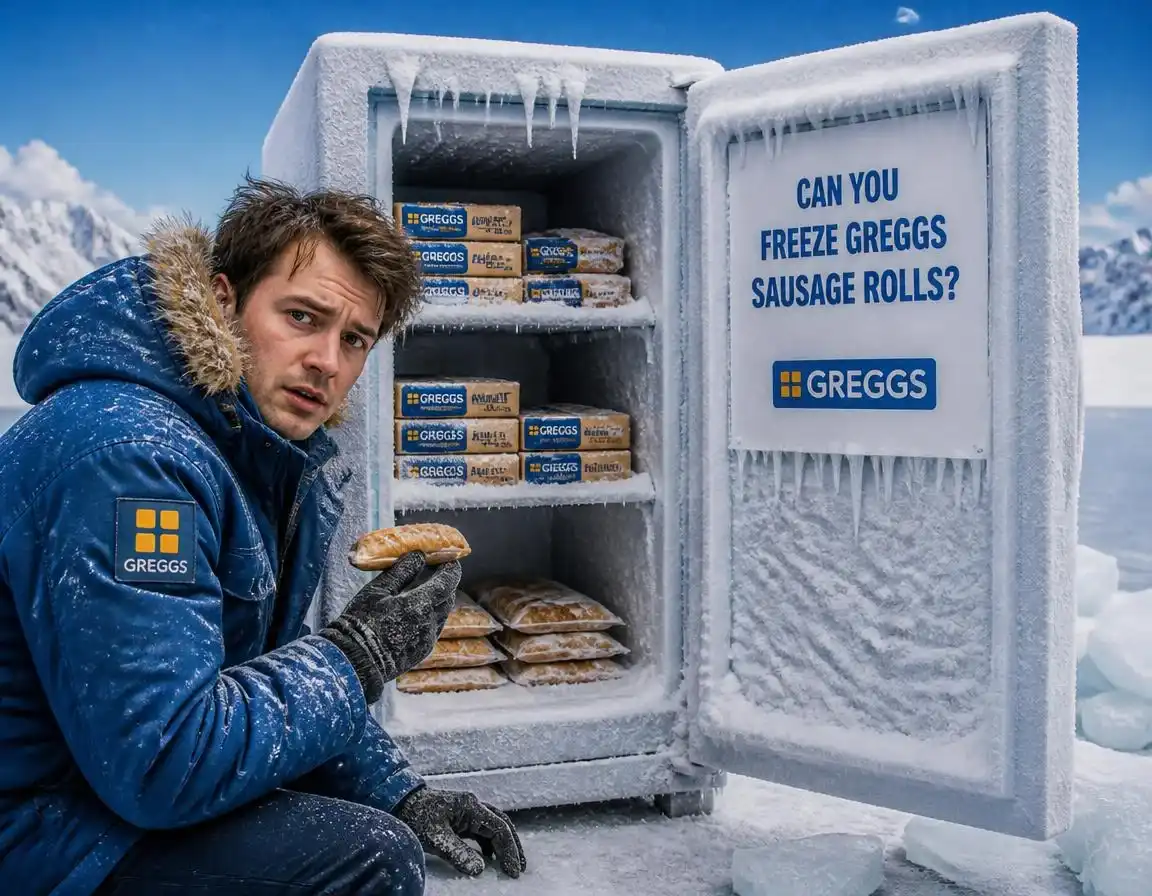
Can You Freeze Greggs Sausage Rolls?

Can You Freeze Greggs Sausage Rolls? Yes — and Here’s How to Do It Properly
The short version
Yes — Greggs sausage rolls freeze fine, whether you bought them fresh over the counter or grabbed a Bake at Home pack. Cool them within two hours, wrap individually, and they’ll eat well for one to two months in the freezer (safe beyond, just duller). Reheat from frozen in an oven or air fryer, never straight from frozen in the microwave, and check they’re piping hot through. The vegan roll freezes just as happily.
There are two kinds of people in this world: those who eat a Greggs sausage roll in the four minutes between the counter and the car, and those who buy six, hide two from the family, and wonder whether the freezer is a viable plan B. I’m reliably the second kind. So here’s the full answer on freezing Greggs sausage rolls — the method, the timings, the safety rules, and the slightly sneaky value trick that makes a chest freezer pay for itself in avoided airport-tier pastry prices.
The short answer: yes, and better than you’d expect
Greggs sausage rolls freeze well because they’re exactly the kind of food freezing suits: cooked filling, high-fat puff pastry, low moisture at the surface. Wrap them properly and reheat them in an oven rather than a microwave, and a roll that’s spent six weeks in the freezer comes back crisp, flaky and honestly indistinguishable from fresh to most people at most tables.
Two routes get you there. You can freeze rolls bought fresh over the counter — which is what this guide mostly covers — or you can skip the effort entirely and buy Greggs’ frozen Bake at Home range from the supermarket freezer aisle (Tesco and other major supermarkets stock it), which is designed to be cooked from frozen and includes the mini sausage rolls that party households get through by the tray. Both work. They just suit different households.
How to freeze them properly
- Cool them fast, freeze them fresh. Freezer-bound rolls should go in on the day you bought them, once they’ve cooled to room temperature — aim to have them wrapped within a couple of hours of purchase. Freezing a roll that’s already three days old freezes in its staleness.
- Wrap each roll individually. Cling film or foil, snugly, with no gaps. Individual wrapping stops them freezing into a brick and lets you defrost or cook exactly the number you want.
- Bag them airtight and label. Wrapped rolls go into a freezer bag or tub with the air squeezed out. Write the date and “sausage rolls” on it — every unlabeled bag in every freezer is a mystery by March.
- Freeze flat and fast. Lay the bag flat so rolls freeze in a single layer rather than a clump. The faster they freeze, the smaller the ice crystals, and the less damage to the pastry layers.
- Keep the freezer at −18°C or below. That’s the temperature that holds quality as well as safety. A freezer running warm is why people’s frozen pastry tastes of last Christmas.
- Cook from frozen, not thawed. Straight from freezer to oven gives a crisper result than defrosting first, and it removes the whole question of how long a thawed roll sat on your counter. Details below.
How long they keep, honestly
| Where the roll lives | How long | What to expect |
|---|---|---|
| Counter, wrapped | Same day | Greggs’ own eat-fresh window; pastry softens overnight |
| Fridge, wrapped | 1–2 days | Fine, but reheat in the oven to bring the crisp back |
| Freezer, wrapped well | 1–2 months | Best eating: crisp pastry, juicy filling, no freezer taste |
| Freezer, held at −18°C | 3 months+ | Safe, but quality fades — drier crumb, duller flake, eventual freezer burn if wrapping was slack |
| Fridge, after thawing | Within 24 hours | Reheat once, piping hot, and eat — don’t refreeze |
The one-to-two-month figure is about eating quality, not safety. Food held constantly at −18°C doesn’t turn unsafe at week nine; it turns disappointing. Freezer burn — those greyish parched patches on badly wrapped pastry — is a quality fault rather than a safety one, but it’s exactly what separates a great frozen roll from a sad one.
Reheating from frozen: the only table you need
| Method | From frozen | Verdict |
|---|---|---|
| Oven, 180°C fan (200°C conventional) | 20–25 min on a tray | The gold standard. Crisp outside, piping hot centre |
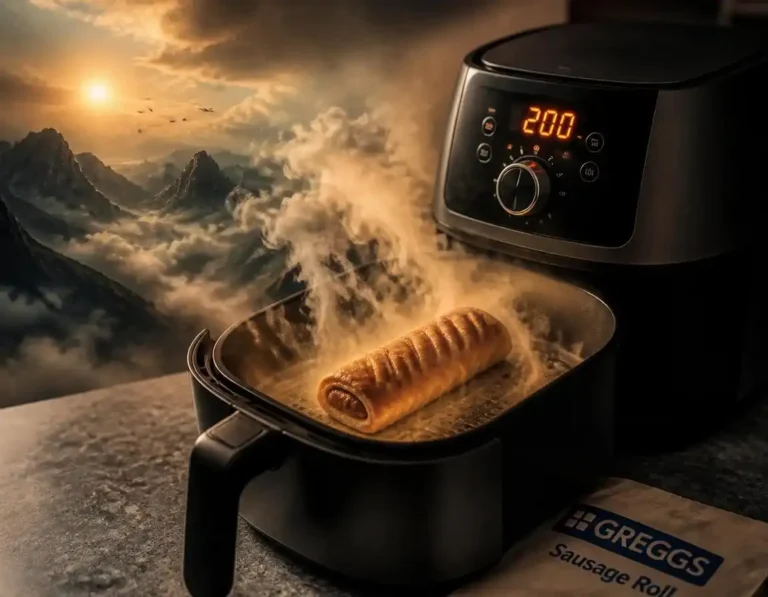
| Air fryer, 180°C | 12–15 min | Nearly as good, faster, and kinder to one-roll emergencies |
| Oven, from chilled | 10–15 min | Best if you thawed overnight in the fridge on purpose |
| Microwave, from frozen | Not recommended | Steams the pastry into chewiness. You lose the entire point of the roll |
| Microwave, then oven flash | 2–3 min + 5 min hot oven | The acceptable compromise when time is genuinely against you |
Whichever method you choose, the finish line is the same: piping hot all the way through — UK food-hygiene training commonly cites 70°C held for two minutes at the centre as the benchmark for safe reheating, and a probe thermometer costs less than four sausage rolls. Cut one open on the first batch if you’re unsure; steam from the middle, not just warmth at the edges.
The microwave trap
People ruin frozen sausage rolls not by freezing them badly but by reheating them lazily. A microwave heats water molecules, which is precisely why it steams laminated puff pastry into a damp spiral instead of leaving it crisp. If your only appliance is a microwave, thaw in the fridge first, microwave briefly, then finish under a hot grill or in a toaster oven for the crust.
The food-safety rules that actually matter
Freezing is forgiving, but only if you respect four rules — the same ones the Food Standards Agency’s home-freezing guidance builds around:
- Cool quickly before freezing. Cooked or bought food shouldn’t sit at room temperature for hours on its way to the freezer. Two hours from counter to wrap is the habit to build.
- Never refreeze thawed rolls raw. Once a frozen roll has thawed, the FSA’s guidance is to use it within 24 hours and not refreeze it unless you cook it again first — and with pastry, reheating twice ruins the texture anyway, so treat it as a one-shot reheat and eat.
- Reheat to piping hot, not warm. Around 70°C for two minutes at the centre, or steaming hot throughout with no cold spots. Reheating is cooking, not warming.
- When in doubt about a bag’s history, bin it. Unknown dates, thawed-and-refrozen texture, heavy freezer burn: none of these are worth a stomach upset over a £1.30 roll.
One diet-tracking note while we’re here: freezing changes nothing on the nutrition side. A frozen-then-reheated sausage roll carries the same 348 kcal and roughly 17.5 Syns as the fresh one — the full breakdown is in our Greggs Slimming World Syns guide. The freezer is not a loophole, sadly.
What freezing actually does to the pastry
Puff pastry is layers of dough separated by fat, lifted by steam in the oven. Freezing introduces ice crystals into those layers; slow freezing makes big crystals, big crystals puncture more structure, and punctured structure means slightly less lift when you reheat. That’s the whole story behind the “one to two months at best” advice — it’s not decay, it’s cumulative crystal damage plus slow moisture loss at the surface.
It also explains the rankings. Mini sausage rolls freeze best, because their high crust-to-fill ratio means the filling never gets chance to dry out. The vegan sausage roll freezes just as happily as the original — plant fat behaves much like dairy fat in the freezer, and at 308 kcal it’s the lighter roll to batch. Saucy bakes freeze worst: a Steak Bake’s gravy migrates moisture into the pastry case over weeks, and no oven trick fully reverses a soggy bottom. Freeze rolls; eat bakes fresh.
The tier-arbitrage trick nobody talks about
Here’s where freezing stops being food science and starts being personal finance. Greggs prices by store tier, and the gap on a single sausage roll is 55p between the cheapest and dearest shelves in the country:
What one sausage roll costs, by where you buy it (2026)
Standard, City & London and Airport tier prices as listed on this site. Eat-in adds 20% VAT on top.
So the trick is boring and effective: buy a batch at a Standard-tier branch — better still, on an app offer — freeze it properly, and your household never pays the city or airport number again. A commuter who grabs two rolls at Gatwick twice a month is spending £88.80 a year on pastry their freezer could have supplied for £62.40. That’s over £25 a year, for walking past a terminal Greggs.
And if batch-freezing sounds like effort, the supermarket freezer aisle already did it for you: Greggs’ Bake at Home range at supermarkets like Tesco cooks from frozen with pack instructions that remove all guesswork. Home-freezing wins on choice of roll and on price; the retail packs win on convenience. Neither is wrong.
What not to freeze from the same bag
- Doughnuts and iced rings — the glaze weeps and the crumb goes dense.
- Vanilla slices and cream-filled treats — custard and cream separate on thawing.
- Sandwiches with salad — lettuce becomes water.
- Saucy bakes (Steak Bake, Chicken Bake) — edible after freezing, but the pastry case never fully recovers.
- Fruit pots and salads — structurally ruined; freeze fruit for smoothies instead, if at all.
The rule of thumb: fat and flour freeze, water and cream don’t. Which is exactly why the humble sausage roll — fat, flour, and seasoned pork — is one of the most freezer-friendly items on the entire Greggs menu.
Frequently asked questions
Can you freeze Greggs sausage rolls bought fresh from the shop?
Yes. Freeze them on the day you buy them, ideally within a couple of hours of purchase once they’ve cooled. Wrap each roll tightly in cling film or foil, bag them airtight, and label the date. They’ll eat at their best for one to two months; beyond that they’re still safe if your freezer holds -18°C, but the pastry slowly turns dull and dry.
Can you cook a Greggs sausage roll straight from frozen?
Yes, and it’s the best way to reheat one. Give it 20 to 25 minutes in a preheated oven at 180°C fan (200°C conventional), or 12 to 15 minutes in an air fryer at 180°C, until it’s piping hot all the way through. Skip the microwave for frozen rolls — it steams the pastry and you’ll lose the flake entirely.
Do frozen Greggs sausage rolls taste the same after reheating?
Close, but not identical. Freezing is kindest to plain puff pastry, so a one-to-two-month-old roll reheated in the oven comes back crisp and recognisably Greggs. The losses are subtle: a slightly drier crumb and marginally less lift in the layers. Minis and vegan rolls come through it best; saucy bakes like the Steak Bake come through it worst.
So yes — freeze them, label them, and stop apologising to nobody at 7am when the oven dings and the kitchen smells like a Greggs counter. Just cool them fast, wrap them tight, reheat them hot, and keep the microwave out of it. Your freezer, like the best bakery assistants, simply gives you back exactly what you put in.